Dated:June 7, 2006By: Michael Bakk of Calgary Space Workers Society
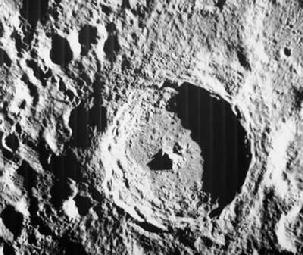
At the South Pole of the moon there is a prominent row of peaks that is the rim of Shackleton’ s crater. Shackleton Crater, named after the early 20th-century Antarctic explorer Sir Ernest Henry Shackleton is a rugged area that is marked in simulation to the adventure of this explorer.
The crater is a 15-mileswide and its rugged surroundings, and pressed in impression was created by the impact of an asteroid or comet, show the story that is a landmark of the early history of Earth's counterpart.
Considered not as significant by the explorers during the Apollo expeditions that landed on the moon thirty-five some odd years ago, the lunar south pole could become important in NASA's plans to return to the moon to stay for a lengthy period. Satellite photos reveal that parts of Shackleton's rim are exposed in near-constant sunlight and may be considered that the extreme cold, of the permanently shaded recesses of the crater floor store ice deposits.
Almost like aimed in a row the solar lighting and frozen water deposited as comets made impact with the moon. They offer the prospect of being an alternate home away from home, with valuable natural resources that space explorers could convert into electrical power, oxygen to breath and water for consumption a and the growing of food supplies. The steppingstone to space is also present with liquid hydrogen and oxygen for use as rocket propellants.
On Earth, the propellants are extracted by chilling air and natural gas. At the moon, comet ice could be separated into the two fuels with solar power.
So, by earth standards, Shackleton qualifies for a room with a view as Canadian’s look at the moon in a new light and as the first stop in the migration of people to the Moon, Mars and deep space.
With a permanent foothold there, future explorers could learn to "live off the land," producing some of their life-support needs and fuel to reduce their need for costly missions launched from Earth to replenish their supplies, says NASA experts.
When the Calgary Space Workers Society indeed send its travelers to the moon, the goals will be different from the groundbreaking ceremony done by the Apollo missions.
"The Apollo program had specific goals in that it was for getting people to the moon and back safely. The from that standpoint was considered complete says NASA's Scott Horowitz. Horowitz supervises the lunar preparations as chief of the agency's exploration-systems directorate. "The big difference with the (new) exploration vision is that the moon is not the goal. The moon is a steppingstone."
Two years ago, President Bush directed NASA to chart the new exploratory course. The path will retire the space shuttle in four years and return the Americans to the moon by 2020. The first visit back since the Apollo missions from 1969 to 1972.
The Congress of the United States will be taking a different course than that of the Apollo program as it will not just be a space race to win over the Soviet adversary but a intermittent stop on their way to Mars.
The goal of getting to Mars will depend largely on government finance to see it through all the obstacles. Scientist’s complaints are recent that NASA is cutting corners on research to save money rather than allowing the positive pressure of succession to continue.
Nevertheless, enthusiasts of space travel look forward, and as NASA unveiled in September a $104 billion plan to accelerate the American’s lunar return to 2018. The blueprint includes a new, up sized Apollo-type capsule that would carry four astronauts, and a pair of new rockets using propulsive hardware borrowed from the space shuttle and the Saturn V moon rocket.
More recently, the lunar planning effort has begun to focus on where explorers will go and what they will do on the moon.
"Actually living and operating on a body other than the Earth is something we haven't done for more than a few days at a time," said Horowitz.
The earliest missions would place the United States on the lunar surface for a week. If strategists choose to develop a settlement, the work could get under way by 2022 and lead to astronaut stays of up to six months at a time.
The space agency's recently finished Explorations Systems Architecture Study ranks the lunar South Pole as a high priority for exploration and for habitation.
By 2008, the moon will become the focus of new, unmanned missions to produce a new map of the lunar terrain in detail never done before. There will be a forward motion to increase the study of the lunar regolith surface for composition and for ice deposits. Other resources will also be a part of the exploration as much of the building blocks of future habitation are already be there.
"Right now, Shackleton (crater) is our best guess as the place to go," said Paul Spudis, a lunar expert at Johns Hopkins University's Applied Physics Laboratory and the author of The Once and Future Moon. "There may be other sites that are more favorable. There are some very promising craters at the north pole. We just don't know."
Spudis was among those who first raised the prospect of comet-ice deposits in craters of the moon's poles.
He was a member of the science team that studied the radar signals collected by the unmanned Clementine mission of 1994.
For now, the South Pole is one of 10 lunar sites NASA plans to evaluate for human exploration and potential settlement.
"We had groups of scientists who looked at the moon and gave us the sites they thought were of the highest priority. We had the resource folks do the same," said John Connolly, NASA's lunar lander preproject manager.
"The one site where these two communities seemed to dovetail was the South Pole."
Most of the moon has sunshine 14 days followed by 14 days of darkness. Temperatures in the shadows reach -240 degrees Fahrenheit and goes up to more than 200 degrees Fahrenheit in the sun, too hot to preserve ice. Apollo astronauts ventured in the light and used cooling systems to avoid extreme heat.
Carefully positioned at the South Pole, a settlement of astronauts could use electricity generated by solar power stations built along the crater rim that is illuminated almost continuously.
The lessons learned from mining an ice cache on the crater floor could prove valuable in preparing for expeditions to Mars as well as in both cases these are the spots in question.
At the Red Planet, U.S. and European missions are gathering evidence of large amounts of water frozen below the terrain that resembles a desert on earth.
The South Pole of the moon holds enormous scientific value as well.
Three years ago, the National Academies, a task force appointed by the USCongress to advise policymakers on science, engineering and pharmaceuticals, placed the South Pole or specifically the Aitkin Basin, and the depression that surrounds Shackleton, near the top of its list of solar system features that should be researched.
The basin, which scientists think was created 4 billion years ago, may offer an unusual window of opportunity into the moon's earliest geologic stage. Possibly the Earth as well as it shares similar chaotic formations. The depression of the basin stretches for 1,500 miles across the far side of the moon.
Most of what is known about the south pole region was gathered by a pair of unmanned spacecraft launched well after the Apollo programs. The Clementine and Lunar Prospector in 1998-99 were the pair that gathered this information. At least three new, unmanned spacecraft, a NASA orbiter and s landing type as well as an Indian orbiter are designed to provide the mapping precision that will be necessary before astronauts return.
"These robotic missions are like scouts," said Gordon Chin, of NASA's Goddard Space Flight Center, who will serve as chief scientist for the first of the U.S. missions, the Lunar Reconnaissance Orbiter. These are to be scheduled for launch in late 2008.
The orbiter's findings should establish the elevations of the crater rims at the pole and document the sunlight conditions over several months.