The Apollo 11 Regolith (moon soil) has been broken down into its chemical composition
n 67% Gabbro (Lava Rock)
n 20% Silica (Glass)
n 10% Ilmenite (Iron Titanium oxide)
n 2% Anorthite (Calcium aluminum
silicate)
n 1% Iron
n -1% trace elements
n 67 % Gabbro
n AKA Lava Rock
n Rich in calcium
n Plagioclase feldspar
n Olivine
n Pyroxene
n Traces of Tranquillityite Iron Garnet & Melanite Garnet
n 20% Silica
n AKA Glass
n spherical and angular fragments
n 2% Anorthite
n AKA: Calcium aluminum silicate
n Calcium
n Aluminum
n Silica
n Oxygen
n 1% Iron
n AKA: Fe
Less than 1% or trace elements
n Chromium
n Copper
n Potassium
n Manganese
n Sodium
n Nickel
n Sulphur
n Vanadium
|
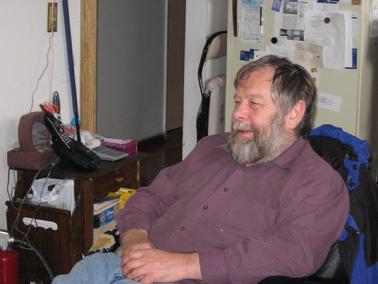
As mentioned by David Playfair who is Commander and Ships Surgeon for the Calgary Space Workers Society
Now we know the chemical composition of the samples of moon dust brought back from the moon. We know that the earth has most of these ingredients. This means that we can make it and experiment with it. We can find out what we can do to break it down and combine it with additional chemicals to create materials not available naturally on the moon. We may also learn methods to make fuel and make our next destination to mars.
|
Igneous rocks
- Igneous rocks (Granites). Igneous rocks are formed by the crystallisation of a magma. The difference between granites and basalts is in silica content and their rates of cooling. A basalt is about 53% SiO2, whereas granite is 73%.
- Intrusive, slowly cooled inside the crust. (Plutonic rock = formed in the earth). Large crystals.
Granite. (Continental crust) Density 2.7-2.8. High silica content (acidic). = quartz + mica + K-feldspar in solid solution. 60% orthoclase and plagioclase fledspars + 25% quartz + 5% darker minerals (biotite, hornblende). Color from flesh to black. Crystals intermingled. Hard, rigid, tough. Granitic rock is much less common on the other terrestrial planets, a fact having to do with the fractionation (where early crystallizing minerals separate fromt he rest of a magma), a process that takes place uniquely on earth, due to the prevalence of plate tectonics. Granodiorite. An intermediate form between granite and diorite. Diorite. High silica content (acidic) Gabbro. Density? Medium silica content. (intermediate). Similar to granite = quartz + feldspar + pyroxene + amphibole + mica + olivene. A layer of gabbro is found in the ocean crust, unerneath the basalt layer (0.5-2.5km), from 2.5 to 6.3 km deep. The lunar highlands have many gabbros (made largely of potassium feldspar - also known as plagioclase) Peridotite.
- Extrusive. cooled rapidly at the surface. Small crystals.
Rhyolite. Medium silica content (intermediate). A fine-grained volcanic rock of granitic composition. Dacite. Andesite. (Volcanic arcs) Density >2.8. Low silica content (basic) = sodium feldspar + amphibole. Dark, dense. Basalt. (Ocean crust) Density 2.9. Low silica content. (basic). Dark, dense. = olivene + pyroxene + Ca-Feldspar in solid solution. Basaltic rocks (gabbro & basalt) are made up of feldspars and other minerals common in planetary crusts. They have been identified as major surface rocks on the dark lunar planes and much of Mars, Venus and the asteroid Vesta.
- Pyroclastic rocks: debris ejected by volcanoes
- Tuff is made of compacted debris from old volcanic ash showers.
- Volcanic breccia is composed of angular mineral fragments embedded in a matrix, the product of explosive eruptions.
- Ignimbrites are sheets of coalesced fine particles which once flowed at high speed, extremely hot, fluid avalanches.
Notes: Density in kg/litre or g/cm3
Classification of common rocksby Dr J Floor Anthoni (2000)
|
 |
| Thumbnail |
|
|
 |
| Thumbnail |
|
|
 |
| Thumbnail |
|
|
 |
| Thumbnail |
|
|
 |
| Thumbnail |
|
|
|
Classification of igneous rocks
This diagram shows the makeup of igneous rocks from the various minerals inside a magma chamber. Density increases from bottom right to top left.
Intrusive rocks are coarse-grained in texture and crystallise slowly from magma deep in the earth's crust. Extrusive rocks are fine-grained in texture and crystallise quickly from lava on or near the earth's surface. The mineralogy determines the type of rock. Granites and rhyolites consist predominantly of quartz and potash feldspar; gabbros and basalts, predominantly of pyroxene and plagioclase feldspar. Other rock types have intermediate mineral compositions. Note that amphibole = horneblende. Note that the density of the minerals increases from top left (2.6) to bottom right (3.4). Top left: high silica content (acidic); bottom right: low silica content (ultrabasic). The temperature range at which magma solidifies is 1100-700ºC.
|
 |
| Classification of common rocks |
|
|
The processes inside a magma chamber
As tektonic plates move underneath a continent, they sweep both oceanic sediment and continental sediment downward into the hot mantle, where they heat up violently by processes as yet unknown. The very hot magma is able to melt the continental crust and travel upward through it, cooling in the process. A batch of magma forms, known as a magma chamber, and what happens inside such a batch cauldron is both very complicated, yet simple to understand. When magma is erupted onto the surface, through the vent of a volcano, it can explode into clouds of ash, because of the enormous pressure of compressed gases like carbon dioxide CO2. This is usually what a young volcano does. As gas pressure diminishes with age, lava pours out, first frothy, cooling rapidly to rhyolite and dacite. Later eruptions are more sedate, resulting in outpourings of andesite. Finally the volcano dies, leaving columns of basalt as a hard crater plug behind. But it is not just the gases that make a difference. As material leaves the magma chamber, there will be less of it inside to combine with the remaining elements. As can be seen from the igneous rock classification diagram above, the first minerals to leave a magma chamber are also the lightest, that have segregated to the top of the chamber: rhyolite consisting mainly of quartz and feldspars. At the other end of the scale, basalts consist mainly of feldspars and pyroxene, which gives it higher density. As the magma chamber cools, while also losing its pressure, it leaves behind inside the earth a chamber full of peridotite, which consists mainly of the mineral olivene. At this stage, there is not enough pressure left to bring this material to the surface. A magma chamber may not make it all the way to the surface, cooling entirely inside the crust instead. The chemical process is now slightly different in that not the lightest minerals are 'leaving' the batch but those that solidify first. The remaining liquid minerals can then still react to form different rocks, but the result is a range of 'intrusive' igneous rocks with compositions matching the extrusive series closely (see diagram above).
Classification of common rocks by Dr J Floor Anthoni (2000)
|
|
The process of forming a rock from a solid solution melt
This diagram shows how various minerals are formed from a magma batch with a fixed ratio of two minerals; in this example albite and anorthite. Note that the many elements inside a magma chamber and resultant minerals, complicate this simple example much further. The rectangle shows relative composition horizontally and temperature vertically. The starting mix is 70% liquid albite and 30% liquid anorthite. Cooling starts above point A. Typical of solid solutions, are the two phase curves for each mineral. To the left and above each curve, the mineral is liquid; to the right and below, it is solid.
As the liquid cools (black arrows from the top down), it arrives at point A. Here the anorthite starts to precipitate, almost purely. In doing so, it increases the albite concentration, and albite moves from A to C while staying liquid. If albite were to precipitate out, its concentration in the melt would decrease, which would move against temperature (up the curve), and is thus impossible. At point C, all anorthite (30%) has solidified slowly. The mix now moves from C to D, rapidly solidifying the 70% albite, which by this time has increased its concentration to 95%. Several types of rock are formed, one on top of the other, as shown by the right-hand diagram.
Note that phase (the liquid/solid boundary) changes not only with temperature but also with pressure, which makes the process of rock formation rather complicated and variable.
Classification of common rocks
by Dr J Floor Anthoni (2000)
(Paul R Pinet in Oceanography, an introduction to Planet Oceanus. 1992.)
www.seafriends.org.nz/enviro/soil/rocktbl1.htm
|
Commander David Playfair on the chemical composition of the ragolith (moon dust and moon rock). The Calgary Space Workers are conducting research in the uses of ragolith in our projects. David gave a projection that will overlap into uses of ragolith in growing the plants. He displayed simulated ragolith that is being used in our experiments.
Further discussion on the need to make more synthetic moon dust for our use. Discussion on the chemical composition and the extraction of oxygen from moon dust followed. Even more discussion of the need for prospectors in search for Carbon, Hydrogen and Nitrogen after getting onto the moon. Further discussion on the middle weight metals of Titanium, Calcium, Iron, Magnesium and the bit of Copper etc.
| |
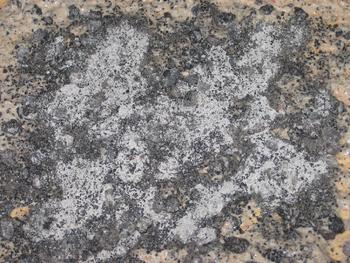 |
| looking at our moondust you can see the similarities but the composition goes much deeper than just what the unassisted eye can see |
|
|
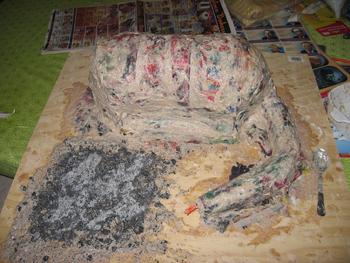 |
| Model Inflatable Habitat with some of our moon dust on the side |
|
|
 |
| Our new affiliation with the Moon Society is a great advantage and a unique opportunity to share and develop our common goals |
|
|
|