| Calgary Space Workers Society |
 |
| © European Communities, 1995-2005 |
|
|
|
BASIC FISSION ON THE MOON
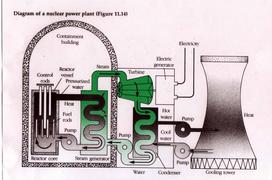
Nuclear fission reactors use a chain of explosions to make heat. This is then converted to heat and then to electrical power. These explosions also cause radiation that is an environmental hazard. Uranium and Plutonium is the fuel used in a fission reactor. These fuels also emit radiation after their burned. This radiation is difficult to deal with on earth but not nearly the problem on the moon.
The moon is a perfect storage place to keep radioactive materials as they don’t have water or an air filled atmosphere to contaminate. It is known that moonquakes that are like earthquakes but milder will not damage storage containers. It is also known that the regolith that is the dust on the moon is able to block radiation. Studies have also revealed that if a nuclear reactor was on the moon it would be a safe distance if it were to be about one km away and in a crater that would accommodate a minivan or a small family car.
Uranium can be safely stored in small amounts without the risk of it exploding. Unfortunately uranium must be stored in thick and relatively heavy containers in order to keep people safe it is in its fuel state. This is why it is lucky that the moon has even more Uranium than there is available to send or otherwise from earth.
A geologist at the University of Hawaii named Doctor G. Jeffery Taylor says that the most Uranium is found in the mountains around Mare Imbrium aswell as the area called Oceanus Procellarum. If we need Uranium for nuclear reactors, it is there if we have some researched ideas on where to look. The Uranium will be harder to mine than on earth as it is mixed with the regolith and not concentrated in areas like on our earth. We can however take comfort in knowing that it is there if we need to use it.
|
 |
| © European Communities, 1995-2005 |
|
|
 |
| © European Communities, 1995-2005 |
|
|
 |
| Copyright (c) 2003,2004 Alessandro Scotti. All rights reserved. |
|
|
|